Menu Close

Mapping a New Future: From Fife College Graduate to Geospatial Data Engineer

Mapping a New Future: From Fife College Graduate to Geospatial Data Engineer

June 2025
Lisa Jackson spoke to us about her journey into the world of geospatial and how important the education from the Geospatial Foundation Skills Programme was in helping to shape her career.

When Lisa Jackson walked into her new role as a Data Engineer with Idox Geospatial, it marked the culmination of an inspiring journey that combined heritage, education, and a leap of faith into an entirely new field.

Lisa, who lives in Fife and describes herself as a mature student in her mid-30s, spent more than a decade at Historic Scotland before making the switch. “I’d been there about 11 years, doing all sorts of different jobs,” she explains. “My first three roles involved GIS, though at the time I didn’t realise it was a career path in itself. I just knew I loved maps and data.”

Her early GIS work included logging planning applications, drawing polygons for casework officers, and helping run the dual designations project, which identified sites that were both listed buildings and scheduled monuments. That project sparked her curiosity about the analytical power of GIS: “It showed me how data could really help make smart decisions and improve processes.”

But despite her passion, career progression within the heritage directorate was limited. Lisa moved sideways into tourism and interpretation, and eventually into graphic design and learning roles. After several years, she admits, “I wasn’t enjoying what I was doing anymore. I felt stuck.”

It was her brother who nudged her toward change: “He said, why don’t you retrain? Look at where the opportunities are. Learn something new.” Almost serendipitously, an advert for the brand-new Geospatial Skills Foundation Course at Fife College appeared on Lisa’s Facebook feed.

“I thought, this sounds perfect. I love maps, I love analysis, and I like learning new things. So I took the leap, quit my job and put all my energy into the course.”

The decision wasn’t without challenges. As part of the first intake of students, Lisa and her classmates helped shape the course itself. She threw herself into both classroom learning and self-study, completing extra Esri and QGIS training in her own time. She particularly enjoyed the environmental science modules, which connected GIS skills to pressing issues like climate change, and Project Seagrass, where Lisa got involved with the local Restoration Forth sessions on seagrass and oysters.

For Lisa, one of the most valuable experiences came through her industry placement with Fife Council’s Planning Services Policy & Place team. Working under mentor Innes Robertson, she developed an interactive map model for the local development plan. “I had to get up to speed quickly with ArcGIS Pro and ModelBuilder,” she recalls. “It was daunting at first, but it gave me real confidence. I could see I was delivering something useful, something that mattered.”

Spatial Data Officer at Fife Council, Innes Robertson said, “it was great to have Lisa enthusiastically tackle the analytical challenge we had. With a template to start working with, she was able to come up with innovative geoprocessing flows to reach the conclusions we needed. I’m pleased that getting some real-world experience complemented the learning she was undertaking on the Geospatial Skills Foundation Course”

After completing the course, Lisa faced the same challenge many new entrants to the geospatial sector encounter: job adverts requesting degrees or years of experience. “It was really disheartening,” she says. “We kept being told there was a skills gap, but the entry-level were limited.”

That changed when a lecturer shared an internship opportunity with Idox Geospatial. “They weren’t asking for a degree or years of coding experience. It was genuinely entry-level, designed to give someone like me a start. When I interviewed, I immediately thought, this feels like a good place to work.”

Lisa began her placement, expecting just a short-term role. But when a colleague announced their departure, she was offered the chance to step into a full-time position. “It was probably more luck than anything, but also a real show of faith from Idox. Based on the work I’d done and my attitude, they believed I could do it. That meant a lot.”

Today, Lisa is thriving as a Data Engineer, overseeing local plans data, managing workflows with Idox’s data capture team in India, and taking on quality assurance and project management tasks. “It’s challenging, but I’m enjoying it. At the minute, I just want to focus on learning, developing, and enjoying my work.”

Looking back, she recognises how far she’s come. “I never would have thought I’d end up working for a software company. I used to think, ‘I don’t know anything about coding, that’s too hard.’ But sometimes you just have to take the leap. Opportunities come when you’re open to them.”

Her message to employers is clear: “If there’s a skills gap, create genuine entry-level jobs. There are people like me, mature students, career changers, ready to work hard and learn. We just need the chance.”

Data and Research Director at Idox Geospatial, Alan Moore commented, “The new Geospatial Foundation Skills Course at Fife College sparked my interest from the outset. I’ve always been keen to support students and those in their early careers as it’s really important we provide opportunities for the next generations of geospatial talent.  Alan went on to say, “The Fife College course uniquely offers a further education route into geospatial. For the industry in Scotland the foundation skills in geospatial, coupled with practical experience and, in many cases previous work or business experience will make a big contribution to addressing skills gaps and providing a cohort of students ready to hit the ground running and enabling the ongoing rapid growth in our industry.”


“As an industry, we must seize the opportunity that the Geospatial Foundation Skills Course brings to Scotland,” said Alan Corbett, Head of Geospatial at the Scottish Government. “Through the work of Location Data Scotland, in partnership with AIG Scotland and the University of Edinburgh, we’ve clearly identified a skills gap at entry level within the geospatial sector. It’s now up to both industry and the public sector to rethink their expectations and requirements for these roles, so we can attract and develop the right candidates for the future.”

Iain Hawker, Assistant Principal – Partnerships & Enterprise at Fife College, said: “We are proud that Fife College is leading the way as the first UK college to deliver a course of this kind. The Geospatial Foundation Skills course equips students with practical skills, industry experience, and the confidence to pursue careers in one of Scotland’s fastest-growing sectors. It also addresses the real skills gap employers face.

“Lisa’s journey demonstrates the real-world impact and life-changing opportunities this course can create, and we look forward to supporting many more students as they follow in her footsteps.

“The achievements of Lisa, and others on the course, would not have been possible without the support of our partners, including Location Data Scotland, the Scottish Government, AGI Scotland and the University of Edinburgh, whose expertise and collaboration have been instrumental in making the course such a success.”

For Lisa, that chance has turned into a brand-new career. From heritage sites to cutting-edge geospatial data, her journey shows the power of combining passion, retraining, and the courage to start again.

About Idox Group

The Idox Group builds enterprise grade software for government and industry, enabling the automation of tasks, simplification of processes and improved information management.

The Idox Geospatial division has over 100 people and is focused on the management and delivery of location-based data, software and services to help customers maximise the benefits from geospatial technology.

About the Geospatial Skills Foundation Programme

The Geospatial Skills Foundation programme, delivered by Fife College, the first of its kind in colleges in the UK, started in February 2025.  It provides an 18-week introduction to GIS and Earth Observation, with each student undertaking a practical project with industry.

The course was recognised at the Association of Geographic Information (AGI) Awards earlier this year, winning the AGI Award for Geospatial Collaboration and Partnership at the prestigious national awards.

The course came into being as a collaboration between Fife College, Location Data Scotland (LDS) the Association for Geographic Information (AGI) in Scotland and the University of Edinburgh with support from the Scottish Government. Research undertaken by LDS and AGI Scotland identified a skills shortage, particularly in relation to technician-level roles and this course was developed as a response, ensuring Scotland continues to be a prime destination for geospatial business.

Watch the video interviews with Lisa and Alan below ⬇️
Business Minister supports geospatial training at Fife College

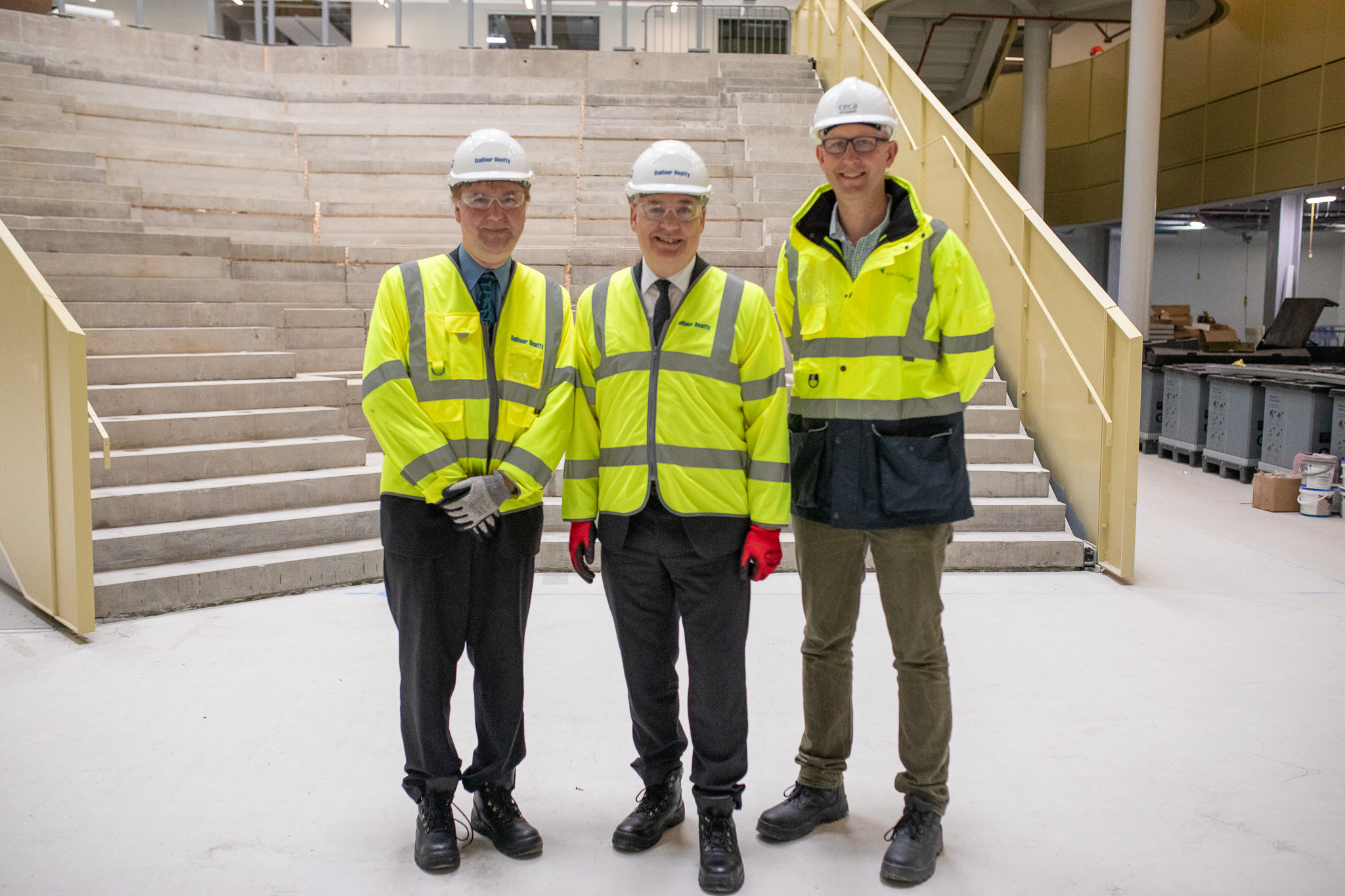
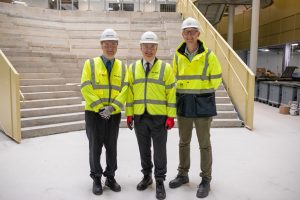
From left to right, Bruce Gittings, University of Edinburgh and Chair of AGI Scotland, Minister Lochhead, Business Minister for Scotland and Jim Metcalfe, Principal of Fife College

Business Minister supports geospatial training at Fife College

June 2025
Fife College's Geospatial Foundation Skills course plays a key role in reducing the skills shortage in Scotland's geospatial sector

Business Minister Richard Lochhead MSP visited Fife College recently to learn how the College has delivered the UK’s first geospatial qualification in a College.

The new Geospatial Foundation Skills course, which started in February 2025, provides an 18-week introduction to GIS and Earth Observation, emphasising core skills and with each student undertaking a practical project with industry. The course came into being as a collaboration between the College, the Association for Geographic Information (AGI) in Scotland, Location Data Scotland (LDS) and the University of Edinburgh with support from the Scottish Government’s Geographic Information Science and Analysis Team. Research undertaken by Location Data Scotland and AGI Scotland identified a skills shortage, particularly in relation to technician-level roles and this course was developed as a response, ensuring Scotland continues to be a prime destination for geospatial business.

The Minister was welcomed to the College’s new Dunfermline City Campus which will open later in the year; the future home of innovative programmes such as the Geospatial Foundation Programme.  The course will be credit rated this month as a recognised qualification on the Scottish Credit and Qualifications Framework at SCQF level 6.

In a recent LinkedIn post, Business Minister Richard Lochhead said:

“Our brilliant colleges are embracing Scotland’s innovation mission, and they must be at the heart of our ambition to become a leading innovation nation.  The sector’s growing focus on innovation is illustrated by the vision behind the spectacular new Fife College campus that will soon open and that I had the privilege of visiting.  There will be an innovation space in the new college but learners are already benefiting.

I was inspired to learn about the Geospatial Foundation Skills Course as part of the geospatial roadmap and the work withLocation Data Scotland with funding from UK Space Agency also involving Bayes Centre. The college’s programme is the first of its kind and so important for the skills pipeline for 21st century Scotland!”

Bruce Gittings, Chair of AGI Scotland and Senior Lecturer at the University of Edinburgh, said:

“This is a remarkable collaboration which will bring new talent into the geospatial workforce in Scotland, supporting existing organisations, allowing new businesses to develop and promoting inward investment.

The Scottish Government created Location Data Scotland to grow our geospatial sector, and this has been part of a significant work-package that will underpin future success.

This course is entirely complementary to what is offered at university-level and therefore brings greater diversity into our industry and the opportunity for progression. We have seen that it can attract school-leavers to this new course, as well as those with interesting backgrounds and experiences coming back into employment or seeking a career-change.

We are already exploring how AGI and LDS can develop their collaboration with Fife in the future.”

Jim Metcalfe, Principal of Fife College, said:

“We were delighted to welcome the Business Minister to our new Dunfermline City Campus and share the exciting work underway across a range of future-focused subject areas. Our programmes in fields such as geospatial technology are designed to meet the skills needs of Scotland’s economy – both now and in the future.

At Fife College, we are committed to being an accelerator for jobs and opportunity, aligning skills with economic demand, and this new campus is at the heart of that mission.”

Next Steps

If your organisation is interested in tapping into new geospatial talent and can offer work experience or employment to students graduating from Fife College this summer, please contact Lauren Miller (laurenmiller@fife.ac.uk) to get involved.

Unlocking Innovation, Skills, and Sustainability for Scotland’s geospatial sector

Unlocking Innovation, Skills, and Sustainability for Scotland’s geospatial sector

March 2024
Exploring the opportunities and outlook for Scotland’s geospatial sector through the lens of Location Data Scotland

As the Location Data Scotland programme enters its fifth year, Scotland is poised to harness a wave of geospatial innovation powered by AI, remote sensing, and a growing talent pipeline. From public sector data initiatives to academic-industry partnerships, the nation is aligning its assets to address pressing challenges like climate change, skills shortages, and energy transition. Featuring insights from key figures across government, academia, and industry, this article explores the opportunities and outlook for Scotland’s geospatial sector in the year ahead. With flagship events like State of the Map in Dundee and pioneering programmes like Fife College’s Geospatial Foundation Skills course, 2025 is poised to be a landmark year for positioning Scotland as a global leader in spatial data and climate-driven innovation.

Alan Corbett, Head of Geospatial at Scottish Government:

“The Scottish Government has made strategic investments in high-resolution remote sensing datasets, including nationwide LiDAR and Planet satellite imagery. These datasets are now being made available to public and private sector organisations across key industries such as renewable energy, infrastructure planning, precision agriculture, and housing development. Our goal is to unlock their full potential by enabling advanced machine learning and AI-driven analytics that can support smarter, faster, and more data-informed decision making across Scotland.”

Damien Griffith, Community Risk Manager, Scottish Fire & Rescue Service:

“We’re facing a persistent skills shortage in geospatial disciplines, particularly in roles requiring deep technical expertise. However, the growing use of AI in geospatial processes, such as automating hazard mapping, routing analysis, and spatial risk modelling, has the potential to ease the burden on under-resourced teams. This shift will allow us to deliver life-saving projects more efficiently, while reserving expert time for critical decision-making.”

Ashley Stewart, Director at Optimat, and Delivery Lead for Location Data Scotland:

“The Geospatial Foundation Skills Programme, delivered in partnership with Fife College, represents a transformative step for the sector. It’s not just about teaching GIS software or how to capture spatial data, it’s about cultivating a new generation of thinkers who understand spatial relationships and can apply that thinking across industries. Graduates come away with hands-on skills in tools like ArcGIS and remote sensing platforms, but more importantly, they bring real-world readiness and a drive to contribute immediately to Scotland’s geospatial ecosystem. This approach directly addresses the talent pipeline challenge we’re seeing across the sector.”

Rob Dunfey, Geomatics Manager at Shell:

“Geospatial data is now central to how we approach energy transition challenges in the North Sea. We’re using location intelligence to balance and coordinate the siting of carbon storage facilities, hydrogen projects, offshore wind farms, and existing oil and gas operations. Thanks to the North Sea Transition Authority’s (NSTA) release of over a petabyte of open-access geoscience and engineering data, much of it spatially enabled, we have the information infrastructure needed to make evidence-based decisions at scale. Initiatives like State of the Map in Dundee this November and the new Space Hub at the Bayes Centre are evidence that Scotland is becoming a nucleus for global geospatial collaboration.”

Zoë Russell, Founder and Director, Rethink Carbon:

“Over the next year, we’ll see geospatial data play a bigger role in tackling climate and nature challenges. Advances in satellite imagery, remote sensing, and AI modelling are making it easier to monitor land use change in near real time. These tools are essential for developing robust carbon markets and measuring nature restoration outcomes with precision.

Scotland’s mix of academic expertise, public investment and a growing nature tech sector gives us a unique opportunity to be a global leader on this front. But to succeed we need to invest in data interoperability, strengthen partnerships between industry and academia, and enable open access to high quality spatial data.”

Bruce Gittings, Senior Lecturer, University of Edinburgh & Chair, AGI Scotland:

“The availability of new types of remote sensing data, whether from satellite constellations or aerial platforms, is opening up powerful new applications across sectors. However, I’m concerned about the UK’s long-term access to global datasets, particularly those maintained by US agencies. Scotland has the potential to become a globally recognised hub for spatial data infrastructure and research, but to get there, we need to ensure continued investment in national data assets and policies that secure access to international data streams.”

As Scotland looks to the future, the convergence of technological innovation, data accessibility, and a renewed focus on skills development creates a powerful foundation for growth in the geospatial sector. The collective ambition of government, academia, and industry stakeholders is clear; to not only harness the benefits of spatial data for domestic priorities but to position Scotland as a globally recognised leader in geospatial excellence. With continued investment, open collaboration, and a bold vision for climate and digital transformation, Scotland is not just adapting to a geospatial future, it is actively shaping it.

The Power of Location Data: Unlocking Scotland’s Potential

The Power of Location Data: Unlocking Scotland’s Potential

March 2024
Working together to foster innovation, develop talent, and drive economic growth.

Scotland boasts a vibrant geospatial sector.  Innovation is happening across the country, but benefits are not being fully realised.  The sector is siloed and faces a shortage of skilled workers. To harness the full potential of location data, we must work together to foster innovation, develop talent, and drive economic growth.

Unlocking the Value of Public Sector Data

The UK and Scottish Governments are committed to making public sector data more accessible (where licensing permits) , thus fostering innovation, and stimulating economic growth. Initiatives like CivTech® demonstrate the power of collaboration between the public, private, and third sectors. By sharing data and working together, we can develop innovative solutions to real-world problems.

Building a Thriving Geospatial Ecosystem

Location Data Scotland (LDS) is at the forefront of driving innovation and growth in Scotland’s geospatial sector. By fostering a thriving ecosystem of businesses, organisations, and individuals, LDS is helping to raise awareness of the benefits of location data, sustainability and investment with the aim of achieving economic growth for Scotland.  These companies are all included in the recently launched LDS Directory.

Collaborative Partnerships for Success

Collaborative procurement and project partnerships are essential for maximising the impact of location data. By sharing resources and expertise, we can reduce costs, improve efficiency, and accelerate innovation.  There are already several collective agreements in place for spatial data, including the Public Sector Geospatial Agreement (PSGA) which public sector organisations can access Ordnance Survey (OS) location data and services, Royal Mail Public Sector Licence and Aerial Photography Great Britain (APGB). Significant savings are being generated through adopting a collaborative approach to procuring national datasets with an estimated 20% saving.

Addressing the Skills Gap

As the demand for geospatial expertise grows, it is imperative to develop a skilled workforce. The Scottish Government and industry partners are investing in training programs and initiatives to equip individuals with the skills needed to succeed in the geospatial sector.  The Geospatial Foundation Skills Programme, which is being delivered by Fife College, is the first of these initiatives.  It is a 6-week course starting in Feb 2025 to provide an introductory foundation to a geospatial role. Places on this course are still available.  More information can be found on the Fife College website.

By embracing the power of location data, Scotland can position itself as a global leader in innovation, sustainability, and economic growth. By working together, we can unlock the full potential of this valuable resource and build a more prosperous future for all.  If you are looking for an innovative organisation working in the geospatial sector in Scotland, search the LDS Directory by type, capabilities or sector.

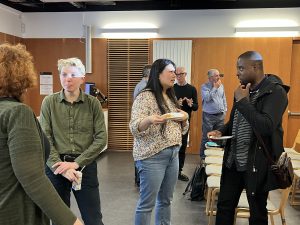
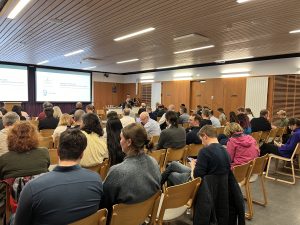
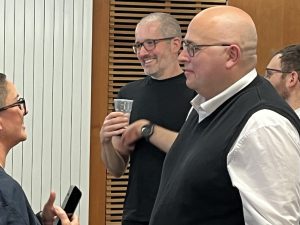
Pictures from the LDS Directory launch event at Geovation Scotland’s hub below ⬇️
 

Launching in November: New Geospatial Skills Programme to Boost Scotland’s Space and Geospatial Sector

Launching in November: New Geospatial Skills Programme to Boost Scotland’s Space and Geospatial Sector

March 2024
LDS is a key partner in developing this new geospatial skills programme.

Location Data Scotland (LDS) is a key partner in the Space Bridges Facilitating Future Space Careers training programme, which includes the highly anticipated Geospatial Foundational Skills Programme, set to launch in November, funded by the UK Space Agency.

The Geospatial Foundational Skills Programme, delivered by Fife College, will be the first of its kind in colleges in the UK.  The aim is to provide foundation skills in understanding geospatial systems and their application in a range of industries.  Students who complete the course will have skills suitable for entry level positions within the geospatial and space sector, brining fresh talent to this fast-growing field.

The programme consists of six learning modules with a focus on the workplace experience:

  • Introduction to Geospatial Systems, Data types, Monitoring, Cartography and Data Visualisation
  • Introduction to GIS, Geospatial Data and Disciplines
  •  Remote Sensing, Earth Observation (EO) & Satellite Observation Technology
  • Completing a Geospatial Project – planning, execution and reporting
  • Multi Sector Geo-Applications by Industry Sector; their Management & Impact
  • Industry Applications, Soft Skills and Employability in the Space and Geospatial Industry.

Head of Geospatial at Scottish Government Alan Corbett said, “This funding has been instrumental in helping shape and deliver this ambitious skills programme.  The space sector is worth £18.9bn* to the UK economy and employs over 52,000 people, with Scotland a leading employer in the sector.  We need to ensure we are attracting and retaining good talent to be able to encourage more inward investment into Scotland and encourage more Scottish businesses to capitalise on opportunities as the space sector grows.”

LDS with its strong industry and public sector network, will help to secure projects and placements for participants, ensuring hands-on experience and smoother entry into industry.

To find out more about the programme visit:

https://www.fife.ac.uk/courses/subject-areas/space-industry-courses/?tagged=7137_7099&hideAlpha=true

If you have a project or a placement that might be suitable for this programme, please complete your details here and one of our team will be in touch with further details.


*Size and Health of the UK Space Industry 2023

From Space to Climate Change geospatial data enables to see the see the world in a different way

From Space to Climate Change geospatial data enables to see the see the world in a different way

March 2024
Geospatial data is essential across many sectors from whale watching to local neighbourhoods.

Geospatial is an important element of any location.  It involves the collection, analysis, and interpretation of data linked to a geographic location such as

  • Maps and charts
  • Satellite imagery
  • GPS data
  • GIS data


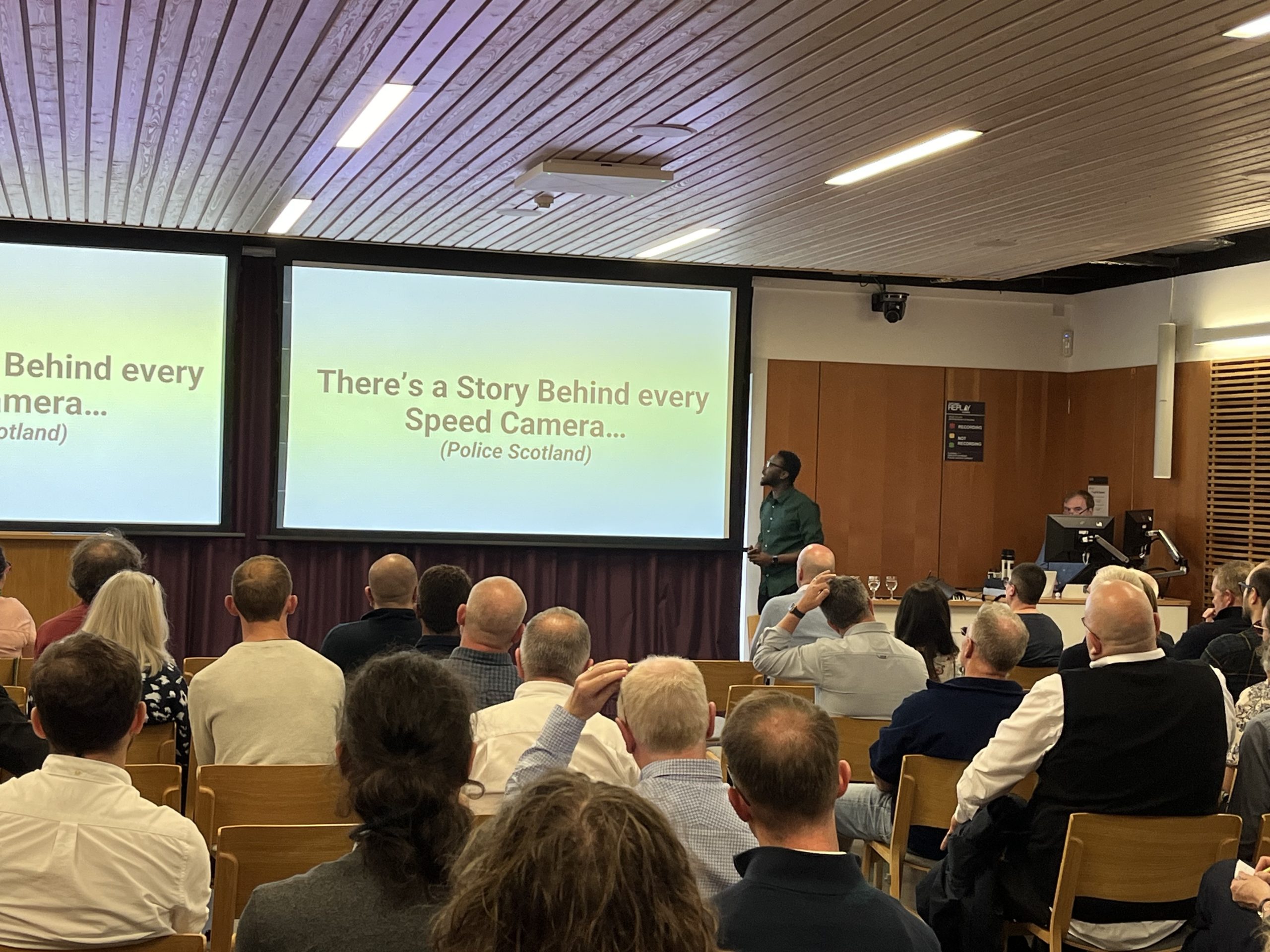
At the event, Geospatial Insights 2024; Innovations and Applications across Sectors held in the Edinburgh Climate Change Institute on Tuesday 27th August, hosted by Location Data Scotland in partnership with AGI Scotland, we heard from a wide range of speakers from various organisations about how geospatial data and technologies are being used in their organisations to deliver products and services.

Technology is evolving further and with applications such as AI and Machine Learning we can analyse locations even further.   Scotland’s strong research base, government support, industry partnerships, and expertise in geospatial technology have made it a thriving hub for satellite and space activities.

Alan Moore from Idox said, “Geospatial data is now being discussed in the Boardroom.  This emphasises the importance of this data source in supporting decision making and helps organisations regulate and monitor their environmental impact”.

The speakers explored the importance of geospatial data across a range of sectors from land management systems through to road safety, whale watching, climate change and local neighbourhoods.

This event was delivered as part of the Data Lab Community’s Geospatial Fringe series.

Steven Thomson, Events and Community Manager at the Data Lab said, “It has been fantastic to see the range and breadth of work going in Scotland and beyond within geospatial. Throughout the last month we’ve heard from organisations working to improve road safety, right through to environmentalism and climate change. The potential for geospatial data to improve where we live, and work is immense and is only going to get more exciting.”

Slides and case examples from the presentations can be viewed below

Make sure your organisation benefits from being part of the geospatial community in Scotland by joining our Directory.  Sign up here.


How do we plug the geospatial skills gap in Scotland?

How do we plug the geospatial skills gap in Scotland?

March 2024
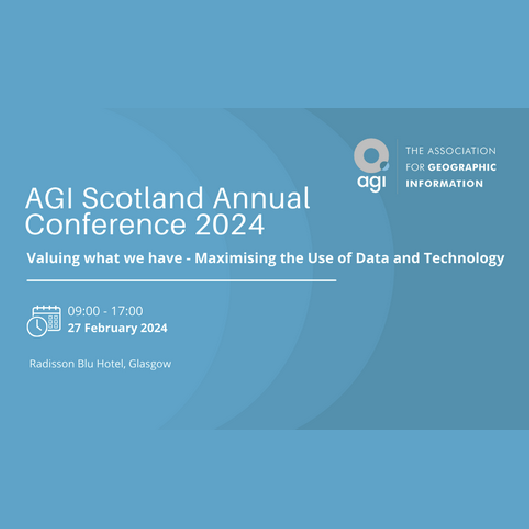
Location Data Scotland hosted a fruitful conversation at the AGI Scotland conference on 27th Feb 2024.

A diverse audience of industry, public sector, academia and students met to discuss strategies to tackle the skills gaps across the sector in Scotland at the recent AGI Conference. While Scotland has the highest rate of geospatial jobs in the UK, the demand is primarily concentrated in major cities like Edinburgh and Glasgow. Skills gaps are clear. Individuals keeping up with rapid advancements in technology areas like remote sensing, Geographic Information Systems (GIS), and data management can be challenging and extracting meaningful insights from geospatial data requires strong analytical and data visualisation skills.

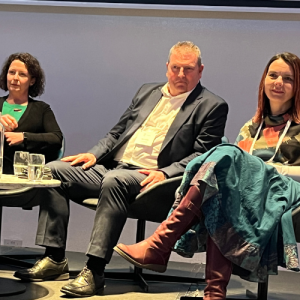
Skills Panel at the AGI Conference
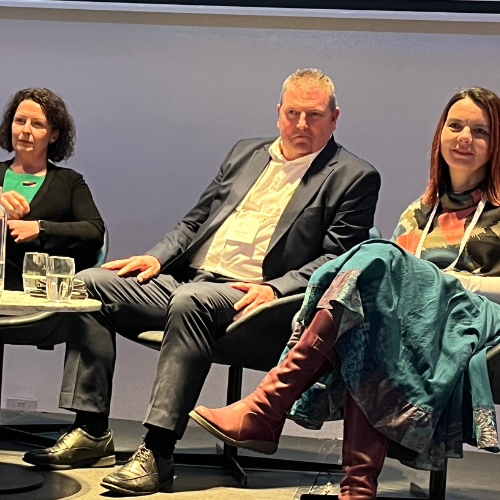
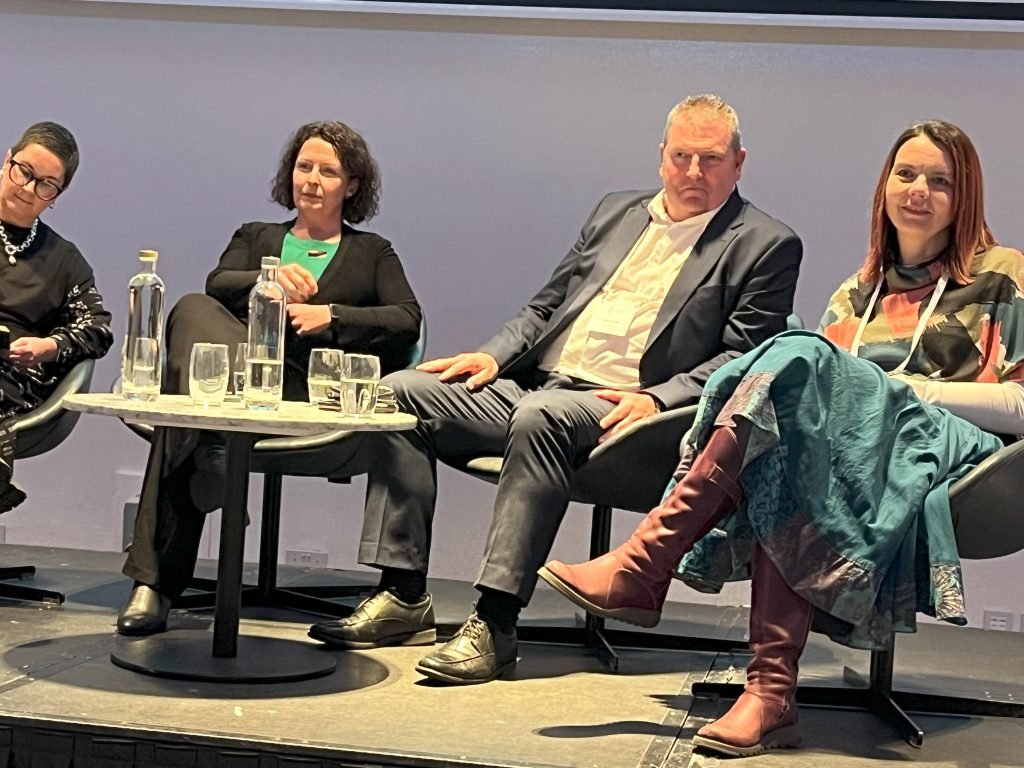
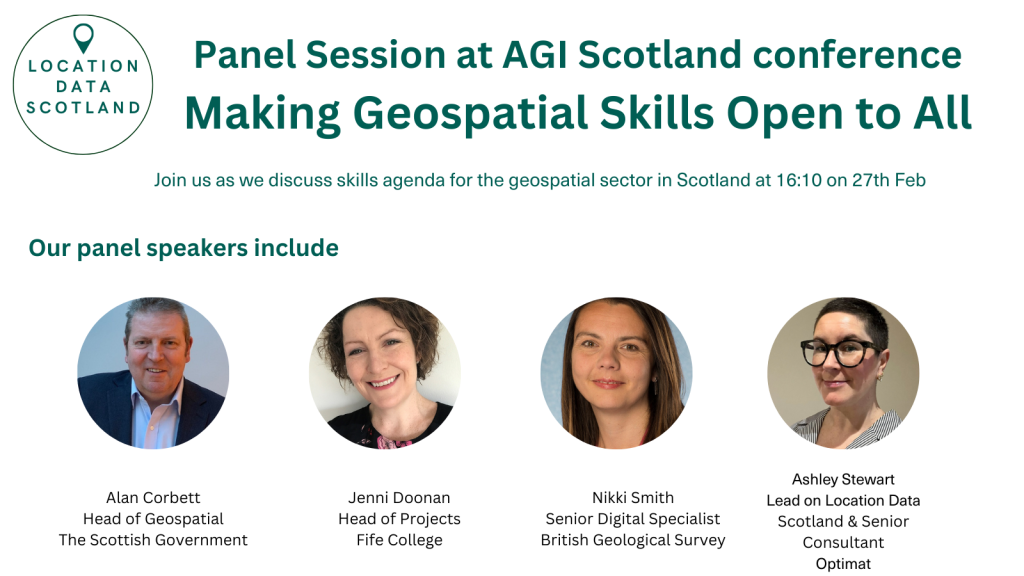
From left to right, Ashley Stewart, Lead on Location Data Scotland, Jenni Doonan, Fife College, Alan Corbett, Scottish Government and Nikki Smith, British Geological Survey.

There are also gaps across different industries like environmental management, urban planning, and transportation, which have specific applications for geospatial technologies. Understanding these nuances and creating a range of blended skills to the chosen field and individual industry sectors is crucial.

As a nation, there is limited geospatial training/skills pathways available, currently study is only available at MSc level. And whilst most people ‘fall into geospatial’ as a career rather than choosing it as a path the lack of pathways causes recruitment challenges for the sector. The problem lies at the lower end of the education ladder – schools, colleges and community projects involving young people (Scouts, Youth Clubs etc) and to attract young people into the industry and choose geospatial as a career path, they need to have the knowledge much earlier in the educational journey. Most school aged children have played Pokemon Go but what they don’t realise is that the technology powering that game is geospatial and it opens up a full spectrum of exciting skilled jobs and opportunities. A huge knowledge gap also lies with parents who don’t see geospatial as a career path for their children. Education needs to be given to parents, with clear examples of the power of this technology across different sectors such as financial services, agriculture, space and tourism.

Geomatics Manager at Shell, Rob Dunfey said:

“I am very supportive of initiatives to build geospatial skills. Obviously, there is value for employers such as Shell in being able to recruit geospatial professionals, but more importantly for broader society and the economy. I truly believe that geospatial skills are going to underpin our energy transition to net zero.”

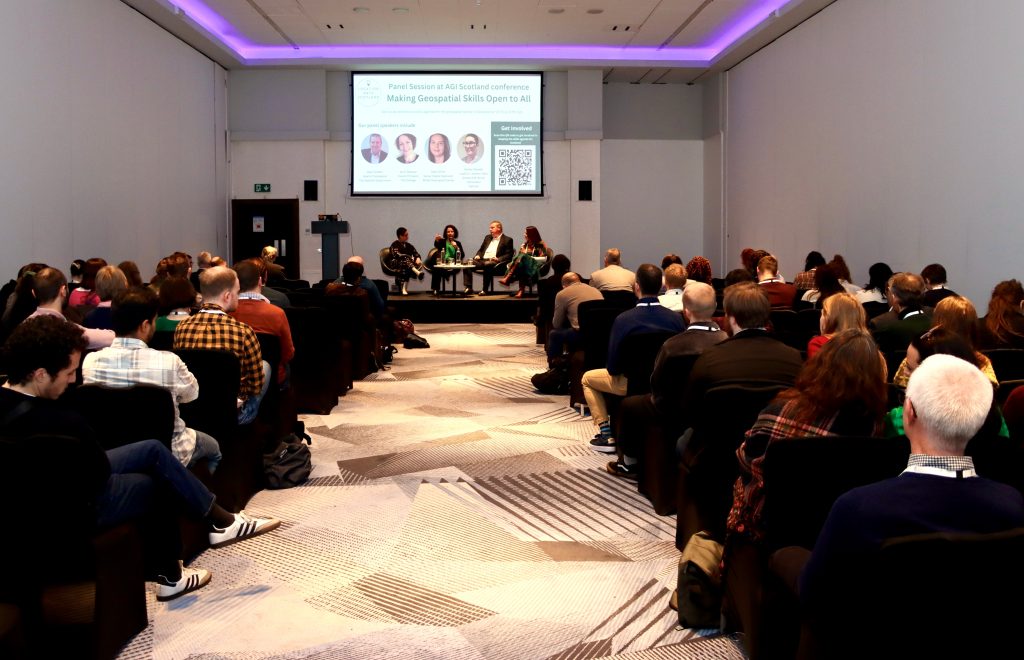
Skills Panel Session at AGI Conference hosted by Location Data Scotland
Picture courtesy of Cameron Easton on behalf of AGI Scotland

Location Data Scotland working in partnership with University of Edinburgh and AGI Scotland are calling for industry to help close the skills gaps. More information is needed from industry to define the essential future skills for the geospatial industry at all levels within their organisations, not just individuals at MSc level.

We need your help. Please get involved in the programme so we can help influence future generations to consider geospatial as a career path. If you would like to be part of this movement, register your details here and we’ll be in touch with next steps.

Register Now

LDS to host skills panel at the AGI conference

LDS to host skills panel at the AGI conference

February 2024

Developing the skills agenda for the geospatial sector in Scotland is critical to ensuring a pipeline of skilled talent is available to expand the economy and grow the sector. Scotland is currently limited to courses at MSc level; thus, impacting the breadth and diversity of individuals training and coming into the sector.

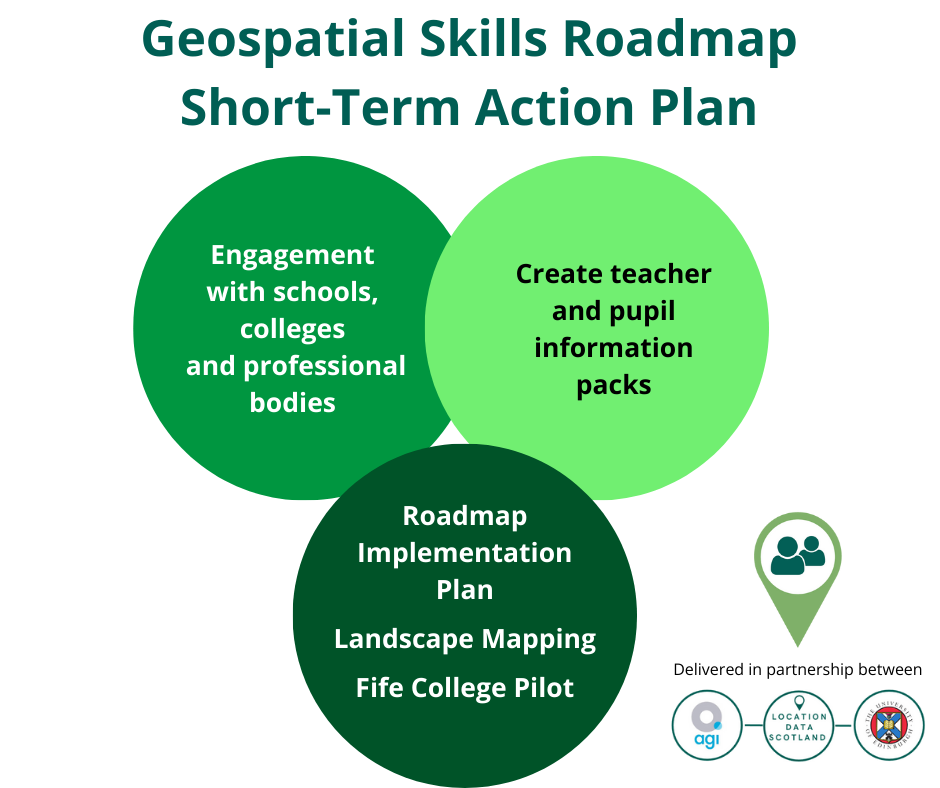
By bringing together leaders from industry, and academia LDS, in partnership with University of Edinburgh and AGI Scotland, has been working over the last 2 years to identify the skills gaps in geospatial across Scotland and has created a unified skills roadmap for the future. Our ambition is to create more jobs using geospatial skills and make Scottish talent more marketable to industry, attracting more companies to set up in Scotland as there will be a cluster of skilled talent, and a dedicated pipeline of highly skilled personnel to support emerging industry requirements. The work on developing the skills roadmap has resulted in a first-of-its-kind pilot programme being initiated with Fife College to develop and test a dedicated geospatial skills course as an introduction into the Geospatial industry.

We are delighted to be hosting a panel at the AGI Scotland conference on 27th February 2024 in Glasgow, bringing together key individuals from across the sector to build on the work already done and explore where we go from here.

Alan Corbett, Head of Geospatial at The Scottish Government

Alan heads up the Scottish Government’s Geographic Information Science and Analysis Team (GI-SAT) within the Digital Directorate. Alan has worked in the Scottish Government’s Geographic Information Service (then SEGIS) since 1998 when the geographic information was first introduced within Government. He has been instrumental in promoting the use of GIS within Government and the Scottish Public sector and is delighted to see how GIS mapping and analysis has developed into an integral part of the decision making process for policy directorates and senior Ministers within the Scottish Government.

Alan’s primary responsibility is giving advice to both internal and external stakeholder on how GI data, systems and analytical processes support strategic decision making across all Scottish Government Directorates and its partner organisations with projects such as the National Resilience and recently the Government Covid Response. He is also responsible for substantive projects or initiatives within the Scottish Government such as the collaboration and procurement of geospatial data for the Scottish Public Sector. Leading on the Public Sector Geospatial Agreement (PSGA) for Scotland, Alan’s role is to ensure it delivers strategic direction, robust timely data and value for money to support all Scottish Public Sector organisations in the delivery of their statutory requirements.

Jenni Doonan, Head of Projects, Faculty of Engineering & Technology, Fife College

Jenni had a 15 year career working in engineering in the European Space Industry before moving into education. She has spent time working at the University of Edinburgh on the Data Education for Schools project as part of the Edinburgh and South East Scotland City Deal before moving to Fife College as Head of Projects in the Faculty of Engineering & Technology. She is responsible for developing innovation projects which give the college the capability and capacity to provide education in new and emerging skills areas.

Nikki Smith, Senior Digital Specialist, British Geological Survey

Nikki is a Senior Digital Specialist within the International division of BGS and has a focus on the design, development and implementation of custom spatial data capture and delivery systems, as well as the design and implementation of digital workflows. Nikki also works extensively with international geological surveys as they aim to increase the use and delivery of their geospatial data, and her work has taken her from Europe to Africa to Central and SE Asia. In addition, Nikki is the Vice-Chair for the Association for Geographic Information – Scotland committee.

Ashley Stewart, Senior Consultant for Optimat and Lead for Location Data Scotland

Ashley co-ordinates and manages Location Data Scotland, on behalf of Scottish Government, to transform services and create new products using geospatial technologies and/or location data in Scotland.

She specialises in data, digital and emerging technologies. Ashley is experienced in techno-market/demand analysis, technology roadmap development, strategy and commercialisation support to private and public sector organisations. Ashely has a BA (hons) Marketing, an MSc IT with Web Development and a PhD in Technology Enhanced Learning and Communities of Practice.

Book your place for the AGI conference

A focus on skills for Scotland’s expanding geospatial sector

A focus on skills for Scotland’s expanding geospatial sector

February 2024

A recent article in Scottish Business News highlighted the focus on skills for the expanding geospatial sector in Scotland, a direct result of the work carried out during the Location Data Scotland pilot programme.

📌 LDS in partnership with The University of Edinburgh and Association for Geographic Information (AGI) Scotland have created a unified skills roadmap for the geospatial sector.

📣 A first-of-its-kind pilot programme has been initiated with Fife College to develop and test a dedicated geospatial skills course as an introduction into the Geospatial industry.

Rebecca Reid, Skills and Capabilities Policy Lead at Geospatial Commission said:

At the Geospatial Commission, our strategy is to ensure the UK stays ahead of the curve in revolutionising location data and technologies. Location Data Scotland supported by University of Edinburgh and AGI Scotland has been instrumental in driving the skills agenda forward, encouraging academia to actively consider this as part of their course curriculum.

This is a great step forward for the geospatial sector in Scotland.

Agri Tech Event

Agri Tech Event

October 2023
Coming this November

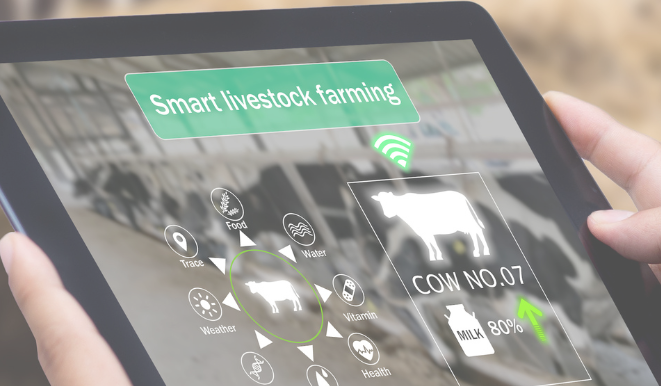
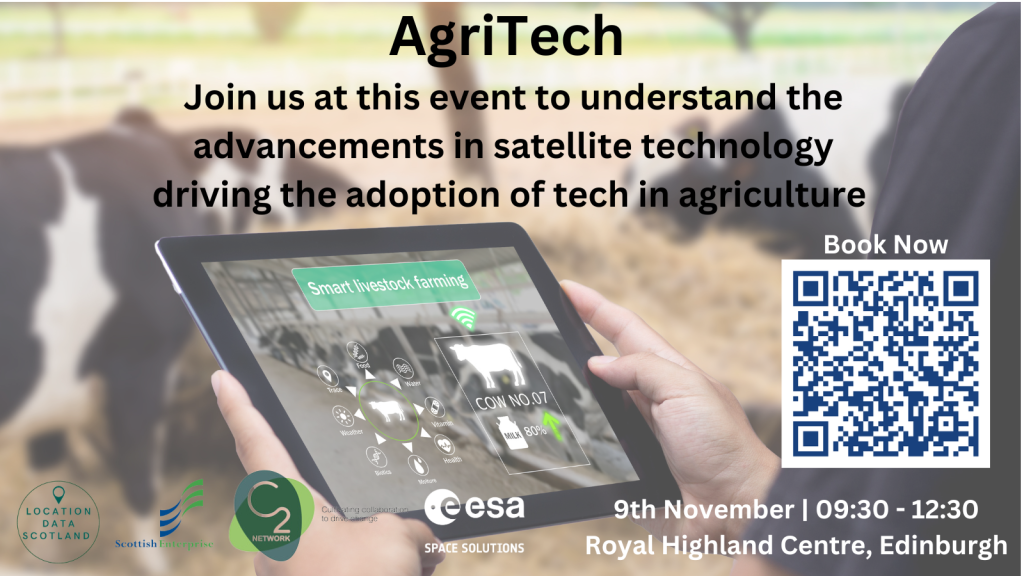
Join us on Monday 9th November at the Royal Highland Centre in Edinburgh for an exciting event which seeks to foster collaboration between Space, Agriculture, Forestry and Financial Services, showcasing how space data can support the needs of land based and financial services sectors.

Delivered in partnership with Scottish Enterprise ESA Space Solutions and C2 Network, we will explore the advancements in satellite technology driving the adoption of technology in agriculture.

Click below to find out more and book your place.