Menu Close

Pitch, People and Process: What PropEco Learned Raising Their First Round of Seed Funding

Pitch, People and Process: What PropEco Learned Raising Their First Round of Seed Funding

September 2025

When, in the summer of 2024,  Glasgow-based PropEco announced a £275,000 seed round led by London VC Symvan Capital, with the University of Strathclyde’s Inspire Entrepreneurs Fund participating, it wasn’t the end of a story, it was just the start of their journey.

Founder & CEO Chris Hardman is quick to downplay any “we’ve made it” claims. What follows is a practical, warts-and-all account of how PropEco navigated its investment raising journey through Chris’ eyes: why they did it, what worked, what didn’t, and what they would do again.


Why raise at all?

After a couple of years navigating through accelerators and applying for various types of grant funding, PropEco had moved beyond prototype to a “version one” of its climate- and wellbeing-risk analytics platform for property professionals, lenders, and insurers. Grants helped, but they were restrictive, short-term, and time-intensive to secure, often only offering small pots of money.

“You put as much effort into getting a grant as you do into raising investment… It’s hard to rely on grant funding longer-term.”

Equity funding offered something grants couldn’t; the ability to develop a strategy and plan across years, not months.  It provided the ability to hire key people, invest in marketing, and keep conversations with large customers alive long enough to convert. Just as importantly, it reduced founder pressure by enabling a salary runway, freeing their attention to build the business rather than chase the next grant call.

The headline lessons

1) It’s all about the people

At seed stage, investors are mostly backing teams. Markets evolve, products pivot, and software moats are rarely impregnable. Credibility comes from what the team has shipped already.  Things like accelerators entered, grants delivered against, early customers onboarded.

What investors are really interested in is… “… How credible are these people? What have they achieved so far?”

Warm introductions mattered. Our experience showed that the same pitch-deck that went unanswered months earlier received traction once routed through a warm, trusted contact. It is essential to start relationship-building with the investors, long before you need money.  If you do, it definitely pays off.

Takeaway: Start investor conversations early and nurture relationships so your pitch-deck arrives with context, not cold.

2) Look beyond Scotland

PropEco began with the Scottish angel networks (as many Scottish startups do) and had mixed experiences.  Their experience highlighted that some investors were more comfortable with conventional, easy-to-understand businesses; another required days of paperwork before bowing out due to a perceived portfolio competitor.

The lead investor they ultimately partnered with, Symvan Capital, is London-based, more comfortable with tech risk, and better matched to PropEco’s profile.

Chris highlighted “Scottish startups need to break out of the ‘only Scottish investors’ mentality if they want to find the best fit.  There are investors with deeper pockets and higher risk appetite in London and the US and they understand the potential of technology businesses like PropEco”

Takeaway: Optimise for fit and fundability, not geography. A similar amount of effort can secure a far larger cheque from a better-aligned investor outside your local ecosystem.

3) A really good pitch deck is non-negotiable

PropEco iterated their deck relentlessly. Early DIY versions “felt fine at the time,” but looked amateurish in hindsight. Spending a few hundred pounds with a designer made a tangible difference in first impressions and presenting the brand professionally.

“Consider what the investor thinks when they see your pitch-deck.  Does it convey what you do, who are the people behind the company, what difference will their investment make and how will they benefit.”

Feedback was sought widely from family, friends, advisors, and founders to question their claims, identify missing context, and sharpen the story.

Practical tips for your deck

  • Lead with the problem, why now, and why you (proof points).
  • Show evidence of demand and traction (letters of intent, pilots, community, non-paid usage). Revenue helps, but it’s not the only traction.
  • Keep a clean, up-to-date financial model, ready the moment interest sparks.
  • Pay for design polish. It’s a small cost with outsized impact.

4) Traction vs. vision: don’t lose focus

Many investors asked for traction. Sensible, but potentially a trap if it pushes you to chase the fastest revenue rather than the right route.

Chris’ advice, “demonstrate demand creatively (active users, pilots, pre-orders, waitlists, community engagement) without derailing the core idea you set out to build. Don’t let fundraising knock you too far off course. Short-term traction that isn’t aligned can create longer-term problems.”

5) The timeline: about six months of active fundraising

PropEco put out early feelers to investors to ‘test the waters.’ Due to early investor feedback, they paused their activity for six months to build traction and onboard their first customers, then actively fundraised over a six month period.

Takeaway: Plan for fundraising to take longer than you expect. Start earlier than feels comfortable, and if you can, raise more than necessary as a buffer can save you from unexpected shortfalls.

6) Fundraising is real work (and it doesn’t stop when the money comes through)

Investment adds reporting and board cadence, but PropEco’s investors have been “hands-off supportive”.  They are responsive when asked (sharing contacts, tapping into their experience), but light on day-to-day engagement.

Closing an investment round is not an exit, it is permission to execute and the obligation to start thinking one step ahead.

“The fun never stops.  You have to think ahead to what’s next almost immediately after the money lands, but it gives you time to start working on your product/innovation and building customer engagement.”

What they would avoid if they did it again

Pay-to-raise services. The team trialled one of the many firms promising mass outreach to investor lists. The result was low-quality, spammy outreach, minimal engagement, and potential relationship damage.

Takeaway: Build your own pipeline. Curate targets, encourage warm intros, personalise outreach. It’s slower, but far more effective and protects your brand.

Context: what PropEco is building

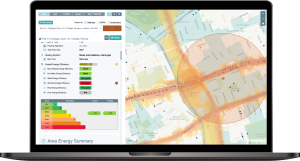
PropEco’s platform analyses transition climate risks, physical climate risks, and wellbeing impacts at property level, from evolving flood exposure and air quality to retrofit potential using AI across thousands of (often proprietary) data sources. Outputs span API access, portfolio assessments, browser-based tools, and property reports.

Their investment injection accelerated hiring and product development and set the foundation for international expansion over the next year.

Final advice for founders

  • Start early, play long. Build investor relationships months before you need capital.
  • Invest in the deck. Story PLUS design wins you the meeting.
  • Optimise for fit, not postcode. Don’t self-limit to local investors, there is more opportunity outside Scotland.
  • Show demand without derailing. Build traction without deviating from your innovation.
  • Budget more time and money. Fundraising and sales both take longer than planned.
  • Choose value-add investors. Money is necessary, however network and sector alignment are differentiators.

PropEco’s raise wasn’t a victory lap, it was a runway extension to build something meaningful with the right people, the right partners, and a pitch that does their ambition justice.
Mapping a New Future: From Fife College Graduate to Geospatial Data Engineer

Mapping a New Future: From Fife College Graduate to Geospatial Data Engineer

June 2025
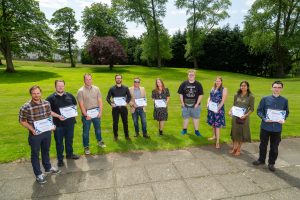
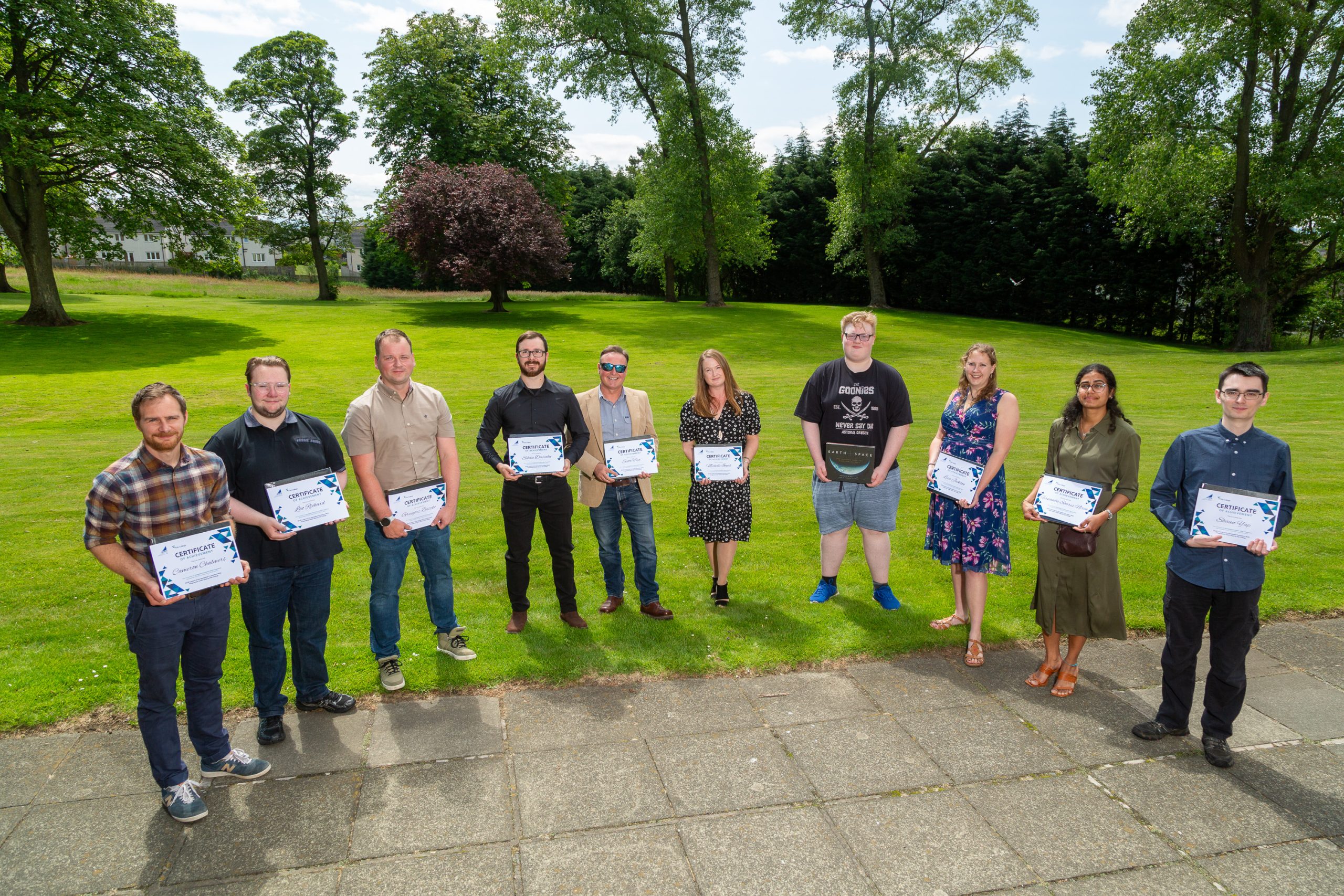
Lisa Jackson spoke to us about her journey into the world of geospatial and how important the education from the Geospatial Foundation Skills Programme was in helping to shape her career.

When Lisa Jackson walked into her new role as a Data Engineer with Idox Geospatial, it marked the culmination of an inspiring journey that combined heritage, education, and a leap of faith into an entirely new field.

Lisa, who lives in Fife and describes herself as a mature student in her mid-30s, spent more than a decade at Historic Scotland before making the switch. “I’d been there about 11 years, doing all sorts of different jobs,” she explains. “My first three roles involved GIS, though at the time I didn’t realise it was a career path in itself. I just knew I loved maps and data.”

Her early GIS work included logging planning applications, drawing polygons for casework officers, and helping run the dual designations project, which identified sites that were both listed buildings and scheduled monuments. That project sparked her curiosity about the analytical power of GIS: “It showed me how data could really help make smart decisions and improve processes.”

But despite her passion, career progression within the heritage directorate was limited. Lisa moved sideways into tourism and interpretation, and eventually into graphic design and learning roles. After several years, she admits, “I wasn’t enjoying what I was doing anymore. I felt stuck.”

It was her brother who nudged her toward change: “He said, why don’t you retrain? Look at where the opportunities are. Learn something new.” Almost serendipitously, an advert for the brand-new Geospatial Skills Foundation Course at Fife College appeared on Lisa’s Facebook feed.

“I thought, this sounds perfect. I love maps, I love analysis, and I like learning new things. So I took the leap, quit my job and put all my energy into the course.”

The decision wasn’t without challenges. As part of the first intake of students, Lisa and her classmates helped shape the course itself. She threw herself into both classroom learning and self-study, completing extra Esri and QGIS training in her own time. She particularly enjoyed the environmental science modules, which connected GIS skills to pressing issues like climate change, and Project Seagrass, where Lisa got involved with the local Restoration Forth sessions on seagrass and oysters.

For Lisa, one of the most valuable experiences came through her industry placement with Fife Council’s Planning Services Policy & Place team. Working under mentor Innes Robertson, she developed an interactive map model for the local development plan. “I had to get up to speed quickly with ArcGIS Pro and ModelBuilder,” she recalls. “It was daunting at first, but it gave me real confidence. I could see I was delivering something useful, something that mattered.”

Spatial Data Officer at Fife Council, Innes Robertson said, “it was great to have Lisa enthusiastically tackle the analytical challenge we had. With a template to start working with, she was able to come up with innovative geoprocessing flows to reach the conclusions we needed. I’m pleased that getting some real-world experience complemented the learning she was undertaking on the Geospatial Skills Foundation Course”

After completing the course, Lisa faced the same challenge many new entrants to the geospatial sector encounter: job adverts requesting degrees or years of experience. “It was really disheartening,” she says. “We kept being told there was a skills gap, but the entry-level were limited.”

That changed when a lecturer shared an internship opportunity with Idox Geospatial. “They weren’t asking for a degree or years of coding experience. It was genuinely entry-level, designed to give someone like me a start. When I interviewed, I immediately thought, this feels like a good place to work.”

Lisa began her placement, expecting just a short-term role. But when a colleague announced their departure, she was offered the chance to step into a full-time position. “It was probably more luck than anything, but also a real show of faith from Idox. Based on the work I’d done and my attitude, they believed I could do it. That meant a lot.”

Today, Lisa is thriving as a Data Engineer, overseeing local plans data, managing workflows with Idox’s data capture team in India, and taking on quality assurance and project management tasks. “It’s challenging, but I’m enjoying it. At the minute, I just want to focus on learning, developing, and enjoying my work.”

Looking back, she recognises how far she’s come. “I never would have thought I’d end up working for a software company. I used to think, ‘I don’t know anything about coding, that’s too hard.’ But sometimes you just have to take the leap. Opportunities come when you’re open to them.”

Her message to employers is clear: “If there’s a skills gap, create genuine entry-level jobs. There are people like me, mature students, career changers, ready to work hard and learn. We just need the chance.”

Data and Research Director at Idox Geospatial, Alan Moore commented, “The new Geospatial Foundation Skills Course at Fife College sparked my interest from the outset. I’ve always been keen to support students and those in their early careers as it’s really important we provide opportunities for the next generations of geospatial talent.  Alan went on to say, “The Fife College course uniquely offers a further education route into geospatial. For the industry in Scotland the foundation skills in geospatial, coupled with practical experience and, in many cases previous work or business experience will make a big contribution to addressing skills gaps and providing a cohort of students ready to hit the ground running and enabling the ongoing rapid growth in our industry.”


“As an industry, we must seize the opportunity that the Geospatial Foundation Skills Course brings to Scotland,” said Alan Corbett, Head of Geospatial at the Scottish Government. “Through the work of Location Data Scotland, in partnership with AIG Scotland and the University of Edinburgh, we’ve clearly identified a skills gap at entry level within the geospatial sector. It’s now up to both industry and the public sector to rethink their expectations and requirements for these roles, so we can attract and develop the right candidates for the future.”

Iain Hawker, Assistant Principal – Partnerships & Enterprise at Fife College, said: “We are proud that Fife College is leading the way as the first UK college to deliver a course of this kind. The Geospatial Foundation Skills course equips students with practical skills, industry experience, and the confidence to pursue careers in one of Scotland’s fastest-growing sectors. It also addresses the real skills gap employers face.

“Lisa’s journey demonstrates the real-world impact and life-changing opportunities this course can create, and we look forward to supporting many more students as they follow in her footsteps.

“The achievements of Lisa, and others on the course, would not have been possible without the support of our partners, including Location Data Scotland, the Scottish Government, AGI Scotland and the University of Edinburgh, whose expertise and collaboration have been instrumental in making the course such a success.”

For Lisa, that chance has turned into a brand-new career. From heritage sites to cutting-edge geospatial data, her journey shows the power of combining passion, retraining, and the courage to start again.

About Idox Group

The Idox Group builds enterprise grade software for government and industry, enabling the automation of tasks, simplification of processes and improved information management.

The Idox Geospatial division has over 100 people and is focused on the management and delivery of location-based data, software and services to help customers maximise the benefits from geospatial technology.

About the Geospatial Skills Foundation Programme

The Geospatial Skills Foundation programme, delivered by Fife College, the first of its kind in colleges in the UK, started in February 2025.  It provides an 18-week introduction to GIS and Earth Observation, with each student undertaking a practical project with industry.

The course was recognised at the Association of Geographic Information (AGI) Awards earlier this year, winning the AGI Award for Geospatial Collaboration and Partnership at the prestigious national awards.

The course came into being as a collaboration between Fife College, Location Data Scotland (LDS) the Association for Geographic Information (AGI) in Scotland and the University of Edinburgh with support from the Scottish Government. Research undertaken by LDS and AGI Scotland identified a skills shortage, particularly in relation to technician-level roles and this course was developed as a response, ensuring Scotland continues to be a prime destination for geospatial business.

Watch the video interviews with Lisa and Alan below ⬇️

Business Minister supports geospatial training at Fife College

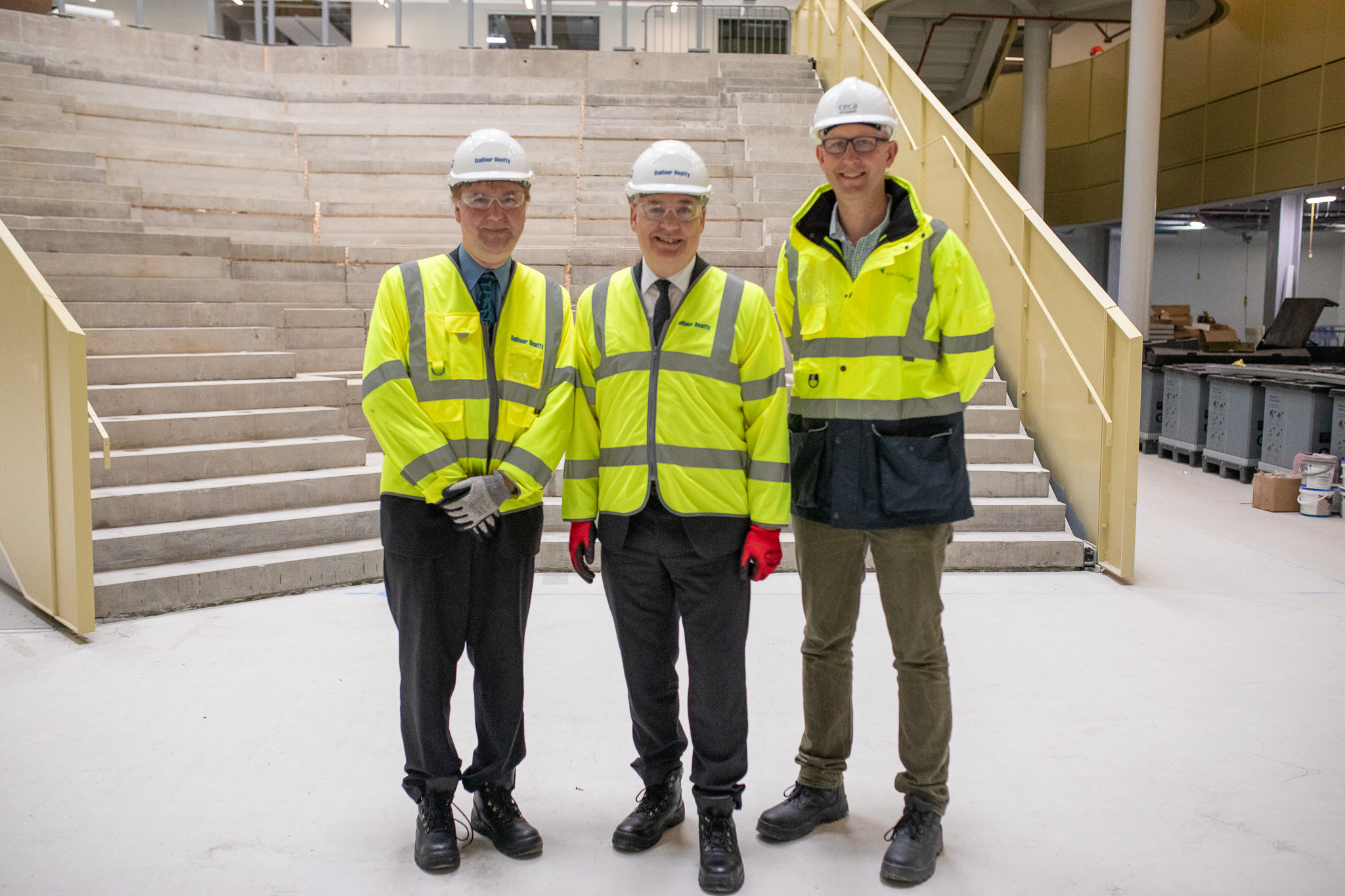
From left to right, Bruce Gittings, University of Edinburgh and Chair of AGI Scotland, Minister Lochhead, Business Minister for Scotland and Jim Metcalfe, Principal of Fife College

Business Minister supports geospatial training at Fife College

June 2025
Fife College's Geospatial Foundation Skills course plays a key role in reducing the skills shortage in Scotland's geospatial sector

Business Minister Richard Lochhead MSP visited Fife College recently to learn how the College has delivered the UK’s first geospatial qualification in a College.

The new Geospatial Foundation Skills course, which started in February 2025, provides an 18-week introduction to GIS and Earth Observation, emphasising core skills and with each student undertaking a practical project with industry. The course came into being as a collaboration between the College, the Association for Geographic Information (AGI) in Scotland, Location Data Scotland (LDS) and the University of Edinburgh with support from the Scottish Government’s Geographic Information Science and Analysis Team. Research undertaken by Location Data Scotland and AGI Scotland identified a skills shortage, particularly in relation to technician-level roles and this course was developed as a response, ensuring Scotland continues to be a prime destination for geospatial business.

The Minister was welcomed to the College’s new Dunfermline City Campus which will open later in the year; the future home of innovative programmes such as the Geospatial Foundation Programme.  The course will be credit rated this month as a recognised qualification on the Scottish Credit and Qualifications Framework at SCQF level 6.

In a recent LinkedIn post, Business Minister Richard Lochhead said:

“Our brilliant colleges are embracing Scotland’s innovation mission, and they must be at the heart of our ambition to become a leading innovation nation.  The sector’s growing focus on innovation is illustrated by the vision behind the spectacular new Fife College campus that will soon open and that I had the privilege of visiting.  There will be an innovation space in the new college but learners are already benefiting.

I was inspired to learn about the Geospatial Foundation Skills Course as part of the geospatial roadmap and the work withLocation Data Scotland with funding from UK Space Agency also involving Bayes Centre. The college’s programme is the first of its kind and so important for the skills pipeline for 21st century Scotland!”

Bruce Gittings, Chair of AGI Scotland and Senior Lecturer at the University of Edinburgh, said:

“This is a remarkable collaboration which will bring new talent into the geospatial workforce in Scotland, supporting existing organisations, allowing new businesses to develop and promoting inward investment.

The Scottish Government created Location Data Scotland to grow our geospatial sector, and this has been part of a significant work-package that will underpin future success.

This course is entirely complementary to what is offered at university-level and therefore brings greater diversity into our industry and the opportunity for progression. We have seen that it can attract school-leavers to this new course, as well as those with interesting backgrounds and experiences coming back into employment or seeking a career-change.

We are already exploring how AGI and LDS can develop their collaboration with Fife in the future.”

Jim Metcalfe, Principal of Fife College, said:

“We were delighted to welcome the Business Minister to our new Dunfermline City Campus and share the exciting work underway across a range of future-focused subject areas. Our programmes in fields such as geospatial technology are designed to meet the skills needs of Scotland’s economy – both now and in the future.

At Fife College, we are committed to being an accelerator for jobs and opportunity, aligning skills with economic demand, and this new campus is at the heart of that mission.”

Next Steps

If your organisation is interested in tapping into new geospatial talent and can offer work experience or employment to students graduating from Fife College this summer, please contact Lauren Miller (laurenmiller@fife.ac.uk) to get involved.

Unlocking Innovation, Skills, and Sustainability for Scotland’s geospatial sector

Unlocking Innovation, Skills, and Sustainability for Scotland’s geospatial sector

March 2024
Exploring the opportunities and outlook for Scotland’s geospatial sector through the lens of Location Data Scotland

As the Location Data Scotland programme enters its fifth year, Scotland is poised to harness a wave of geospatial innovation powered by AI, remote sensing, and a growing talent pipeline. From public sector data initiatives to academic-industry partnerships, the nation is aligning its assets to address pressing challenges like climate change, skills shortages, and energy transition. Featuring insights from key figures across government, academia, and industry, this article explores the opportunities and outlook for Scotland’s geospatial sector in the year ahead. With flagship events like State of the Map in Dundee and pioneering programmes like Fife College’s Geospatial Foundation Skills course, 2025 is poised to be a landmark year for positioning Scotland as a global leader in spatial data and climate-driven innovation.

Alan Corbett, Head of Geospatial at Scottish Government:

“The Scottish Government has made strategic investments in high-resolution remote sensing datasets, including nationwide LiDAR and Planet satellite imagery. These datasets are now being made available to public and private sector organisations across key industries such as renewable energy, infrastructure planning, precision agriculture, and housing development. Our goal is to unlock their full potential by enabling advanced machine learning and AI-driven analytics that can support smarter, faster, and more data-informed decision making across Scotland.”

Damien Griffith, Community Risk Manager, Scottish Fire & Rescue Service:

“We’re facing a persistent skills shortage in geospatial disciplines, particularly in roles requiring deep technical expertise. However, the growing use of AI in geospatial processes, such as automating hazard mapping, routing analysis, and spatial risk modelling, has the potential to ease the burden on under-resourced teams. This shift will allow us to deliver life-saving projects more efficiently, while reserving expert time for critical decision-making.”

Ashley Stewart, Director at Optimat, and Delivery Lead for Location Data Scotland:

“The Geospatial Foundation Skills Programme, delivered in partnership with Fife College, represents a transformative step for the sector. It’s not just about teaching GIS software or how to capture spatial data, it’s about cultivating a new generation of thinkers who understand spatial relationships and can apply that thinking across industries. Graduates come away with hands-on skills in tools like ArcGIS and remote sensing platforms, but more importantly, they bring real-world readiness and a drive to contribute immediately to Scotland’s geospatial ecosystem. This approach directly addresses the talent pipeline challenge we’re seeing across the sector.”

Rob Dunfey, Geomatics Manager at Shell:

“Geospatial data is now central to how we approach energy transition challenges in the North Sea. We’re using location intelligence to balance and coordinate the siting of carbon storage facilities, hydrogen projects, offshore wind farms, and existing oil and gas operations. Thanks to the North Sea Transition Authority’s (NSTA) release of over a petabyte of open-access geoscience and engineering data, much of it spatially enabled, we have the information infrastructure needed to make evidence-based decisions at scale. Initiatives like State of the Map in Dundee this November and the new Space Hub at the Bayes Centre are evidence that Scotland is becoming a nucleus for global geospatial collaboration.”

Zoë Russell, Founder and Director, Rethink Carbon:

“Over the next year, we’ll see geospatial data play a bigger role in tackling climate and nature challenges. Advances in satellite imagery, remote sensing, and AI modelling are making it easier to monitor land use change in near real time. These tools are essential for developing robust carbon markets and measuring nature restoration outcomes with precision.

Scotland’s mix of academic expertise, public investment and a growing nature tech sector gives us a unique opportunity to be a global leader on this front. But to succeed we need to invest in data interoperability, strengthen partnerships between industry and academia, and enable open access to high quality spatial data.”

Bruce Gittings, Senior Lecturer, University of Edinburgh & Chair, AGI Scotland:

“The availability of new types of remote sensing data, whether from satellite constellations or aerial platforms, is opening up powerful new applications across sectors. However, I’m concerned about the UK’s long-term access to global datasets, particularly those maintained by US agencies. Scotland has the potential to become a globally recognised hub for spatial data infrastructure and research, but to get there, we need to ensure continued investment in national data assets and policies that secure access to international data streams.”

As Scotland looks to the future, the convergence of technological innovation, data accessibility, and a renewed focus on skills development creates a powerful foundation for growth in the geospatial sector. The collective ambition of government, academia, and industry stakeholders is clear; to not only harness the benefits of spatial data for domestic priorities but to position Scotland as a globally recognised leader in geospatial excellence. With continued investment, open collaboration, and a bold vision for climate and digital transformation, Scotland is not just adapting to a geospatial future, it is actively shaping it.

Geospatial solutions to solve ecological and environmental problems

Geospatial solutions to solve ecological and environmental problems

March 2022
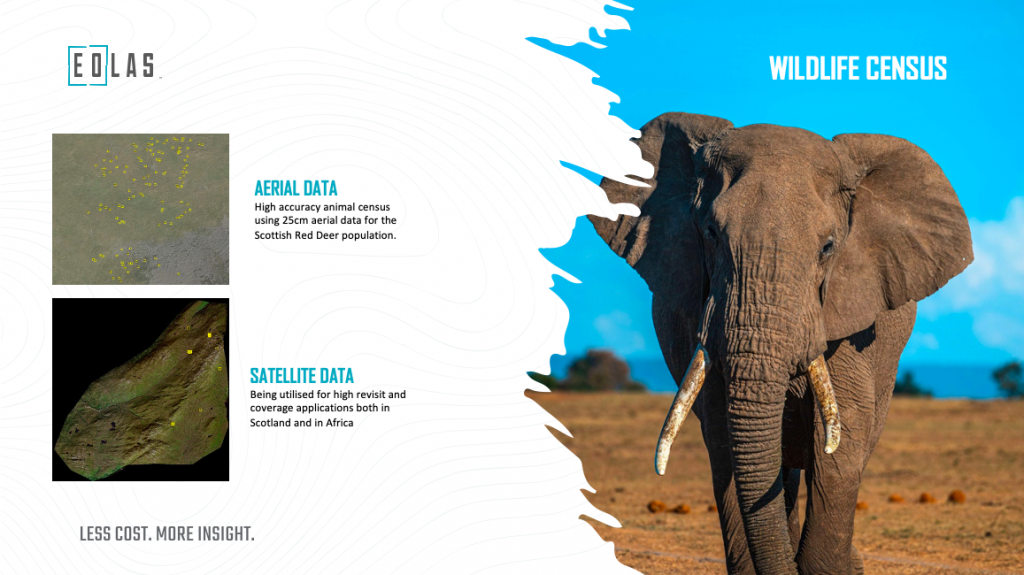
We spoke to Doug McNeil of Eolas Insight about the support received from Location Data Scotland and being part of the Geovation Accelerator Programme.

Eolas Insight provide technical solutions focused on the ecological and environmental sectors in an easy, user friendly way.

EOLAS

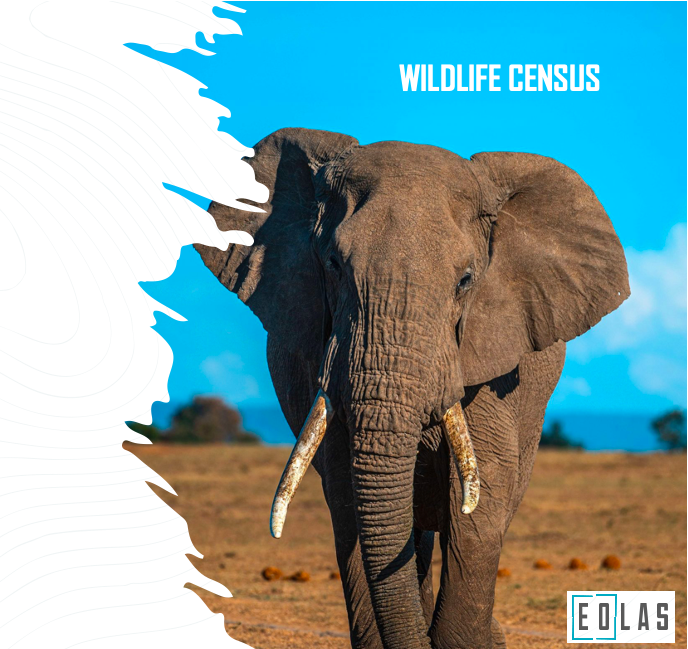
They detect and provide counts for animals using satellite and aerial imagery combined with artificial intelligence. They have successfully delivered a project in Scotland tracking red deer and are now working in Mozambique looking at large animals – giraffes and elephants.

As part of the Geovation accelerator programme the team at Eolas Insight has been developing a business and financial case for a truly innovative geospatial portal that will allow environmentalists and ecologists to access the technologies for themselves to carry out the analysis.

Doug McNeil
Doug McNeil

In his interview founder of Eolas Insight Doug McNeil said, “The Geovation Accelerator programme allowed us to focus on the portal proof of concept. This was a critical step to format the business case prior to developing the prototype.  I really enjoyed the personal approach from the team at Geovation as they didn’t just provide information; they took the time to work out how this information could be embedded into our business.”

Eolas Insight were also supported by Location Data Scotland, who were instrumental in helping them network into other industries and opened doors to potential collaborators in the agricultural sector. Doug said, “Talking, collaborating and networking is key for any organisation working in the geospatial sector to not just open doors but to test your ideas and assess the next steps for your business. It can really make a huge difference.”


From street and forestry mapping to waste transparency, Scotland is a hive of innovative businesses in the location data sector

From street and forestry mapping to waste transparency, Scotland is a hive of innovative businesses in the location data sector

December 2021

Location Data is being used in all aspects of our lives; from street mapping to advertising. There are some interesting solutions, utilising location data as an enabler of innovation being created in Scotland – the home of innovation.

We recently spoke with three of these businesses to find out what impact their innovative solutions are having on the wider marketplace.

How does Gaist use location data?

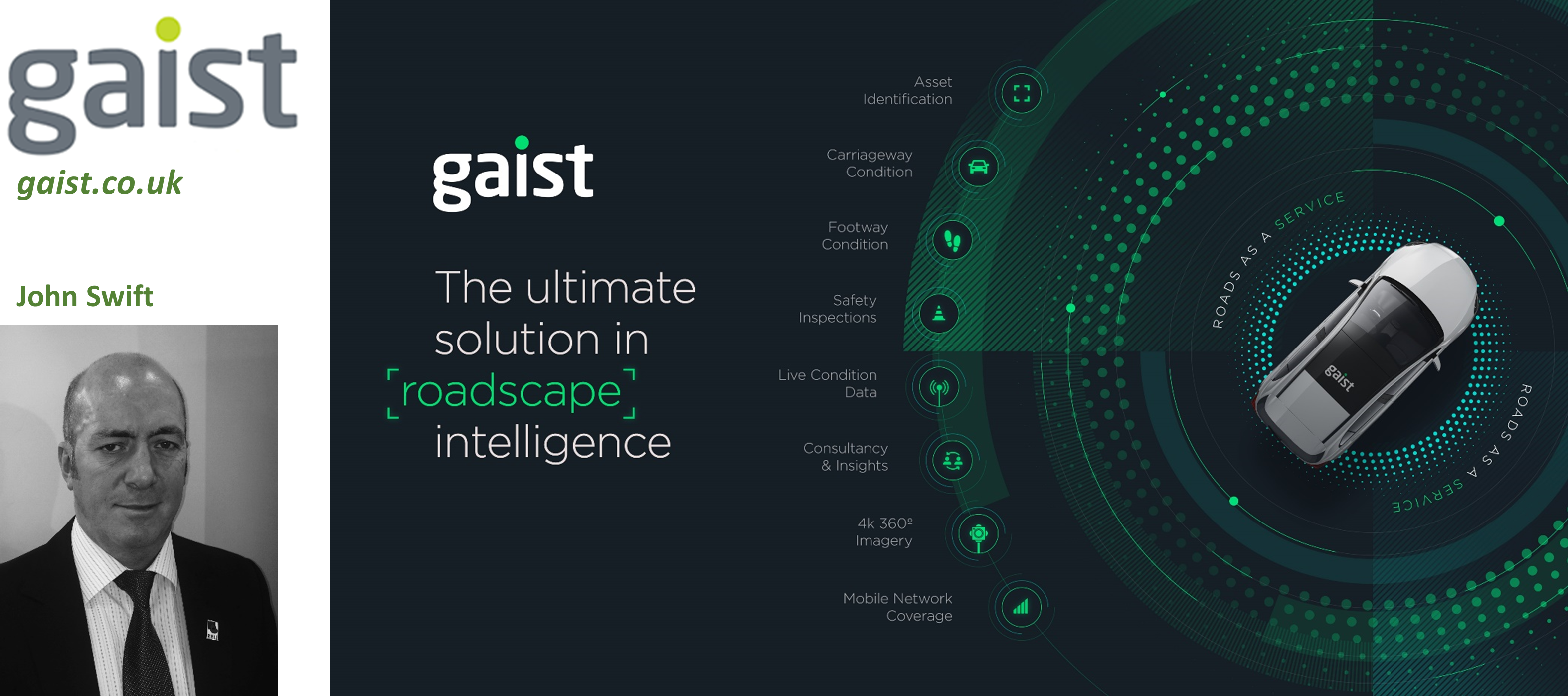
Gaist works with local authorities, utilities and telecoms companies, utilising the most advanced location data and technology to better understand the condition of highway infrastructure and assets, enabling detailed lifecycle planning across the whole network to be undertaken.

What makes Gaist innovative?

Gaist collects 360° 4k roadscape imagery encompassing every road, footpath and asset (lighting columns, signage, bollards etc) across the UK.  Their technology enables customers to identify where the issues on their network are and manage their highways maintenance activity with a degree of effectiveness never seen before.

Future plans

Through integration of dynamic condition data from vehicles circulating on the road network, Gaist can provide further modelling to highlight the prevalence and impact of poor road surfaces across whole networks. This presents a significant opportunity for local authorities to prioritise repairs and proactive maintenance on active travel routes.   John Swift, Gaist Head of Business Development in Scotland, said, “The amount of location data we are collecting is highly significant for the Scottish local authority market and the focus for Gaist is to turn this big data into big value for our clients, enabling them to maximise resources and gain a better understanding of their full network over long periods of time.”

How does Global Surface Intelligence use location data?

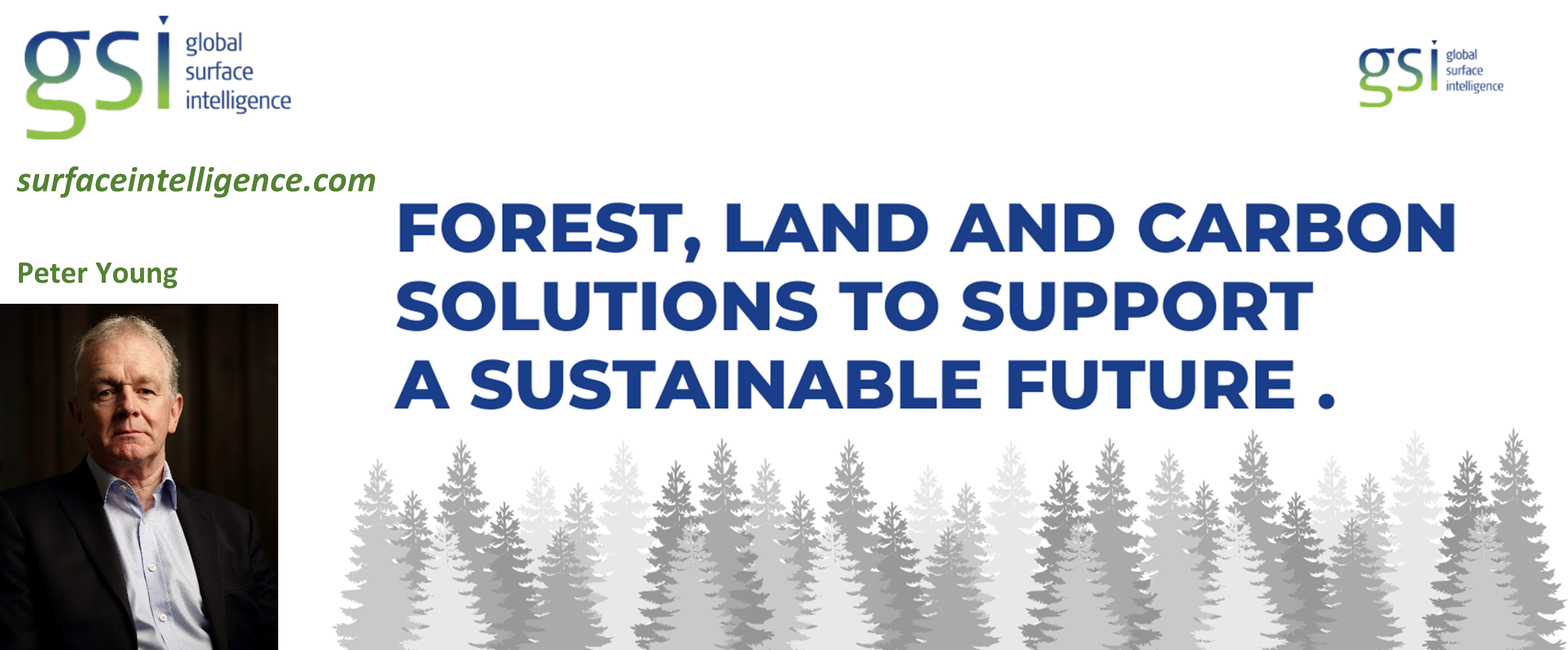
GSI uses satellite imagery to produce analysis ready data to support due diligence forest owners, assets managers and real estate agents who need to have accurate and verifiable forestry assets.  GSI combines the satellite data with LiDAR and ground survey reference data to produce large scale accurate forest inventories.

What makes Global Surface Intelligence innovative?

By producing analysis ready data GIS can measure, map and monitor forestry, land use and cover. Landowners, investors and service providers can make better informed decisions about their assets to enable management of natural resources significantly contributing to a more sustainable future.

Future plans

There is a major opportunity to leverage the GIS technology and platform to understand and verify forest carbon to…

  •     Discover unrealised carbon offset opportunities
  •     Quantify carbon stock
  •     Carbon credit aggregation
  •     Monitor carbon and conservation protocol compliance

How does Topolytics use location data?

More than 60% of the world’s waste ends its life in a landfill, waste dump or leaks into the environment.  The lack of transparency and trust across the waste system hampers resource recovery and value maximisation across the supply chain, that includes waste producers, the recycling industry and government.

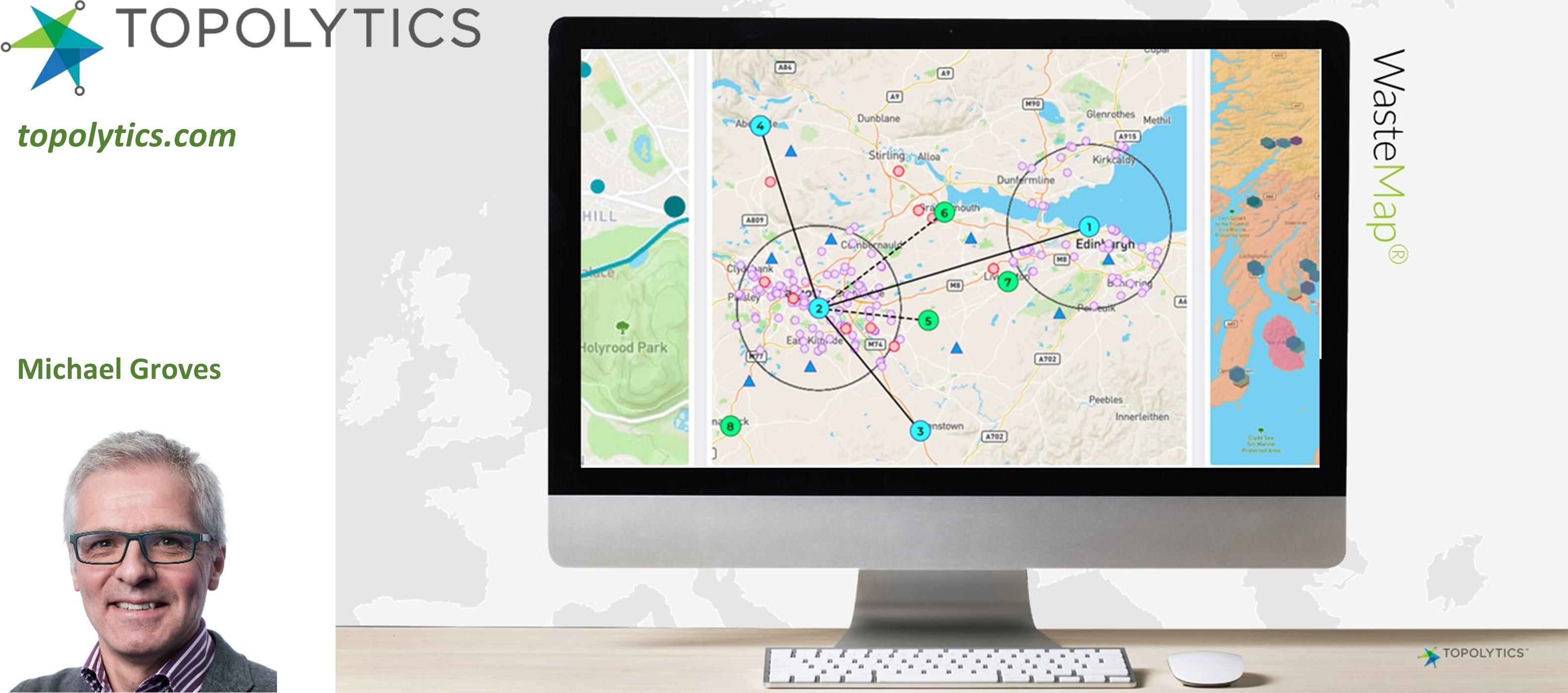
Topolytics is a data aggregation and analytics business that is making the world’s waste visible, verifiable and valuable.  Its WasteMap platform generates insights for waste producers, recyclers and government, that enable greater materials recovery, drive operational efficiencies, support investment strategies, enhance transparency and reduce carbon emissions through the WasteChain.  Topolytics is acknowledged by IDC, Frost & Sullivan, Cleantech Group and SAP as a leading AI and analytics player in the $4.5Bn smart waste management sector.

What makes Topolytics innovative?

Companies are spending a considerable amount of money on managing waste, but have limited visibility and control over this material once it enters the waste and recycling supply chain.  These companies are also setting corporate targets on NetZero and are subject to greater scrutiny on environmental, social and governance (ESG) performance.  Through a subscription to WasteMap they get a live view on waste types and amounts and can see what happens to waste and by-products.  The resulting insights support target setting and generate resource and cost savings as well as reducing carbon impacts.

Recyclers and waste brokers also have complex supply bases and are under growing scrutiny on what they do to waste material.  WasteMap is enabling them to clean and manage many complex data sets and drive efficiencies, compliance and reporting.

Future plans

Topolytics has launched WasteMap as a subscription product to waste producers, recyclers and brokers.  The company is growing its customer base in the UK and internationally and will be launching new modules in 2022 and beyond.


If your organisation is working with location data in an innovative way, please add your profile to the Location Data Scotland Directory.  We welcome organisations from industry, academia, 3rd sector, government agencies and projects.  Here you will be able to:

  •       Find Customers
  •       Find Suppliers
  •       Collaborate with new Partners
  •       Find out about Funding Sources and Partners
Directory